Niagara Economic Update – May 13, 2026
This report summarizes the May, 2026 economic update presentation to the Planning and Economic Development Committee of Niagara Region Council. While economic growth in Niagara has slowed, the region is seeing growth in both population and housing affordability. Key facts [...]

Canada’s National Food Security Strategy
Canada's National Food Security Strategy is about giving Canadians more choice, more control, and more affordable locally-produced food on the shelf. A more Canadian food system means one that is more reliable, with local food, lower costs, and stronger communities. [...]

Niagara Parks Sustainability Report 2025-2026
Niagara Parks' first-ever Sustainability Report outlines the agency's progress in 2025-26 in environmental conservation, climate resilience, and sustainable operations across the 56-kilometre Niagara River corridor. The report outlines achievements spanning five key pillars which are part of Niagara Parks' long-term [...]
Connections Between Poverty, Climate, Women’s Health & Health Equity
Increasingly, health organizations in Canada are recognizing the climate crisis as a health emergency which exacerbates existing inequities, and calls for increased action at multiple levels. In this webinar recording, the Canadian Poverty, Health Equity, and Climate Change initiative (CPHECC) [...]
Community Action on the UN Sustainable Development Goals in Canada & Niagara
How can global goals help guide local action? In this recorded webinar, Community Potential brings the United Nations Sustainable Development Goals down to earth by exploring how the SDGs are already shaping community work in Canada and Niagara. Rather than [...]

Indigenous Visions of Making Home in Niagara
This policy brief aims to assist the Indigenous community in informing Niagara and its decision-makers of their visions for housing and in identifying persistent barriers. A community-driven research project brought together Indigenous leaders in the Niagara region advocating for Indigenous-led [...]

Gendered Perspectives on Mental Health Among Canadian Farmers
University of Guelph research examined gendered perspectives on mental health among Canadian farmers. Semi-structured interviews of 75 farmers and agricultural community members centred on stress, mental health challenges and help-seeking. Results underscore that the contributions of women farmers remain undervalued. [...]

Working with people with lived and living experience: A guide for meaningful engagement
This guide highlights practical approaches and recommendations for organizations to engage with people with lived and living experiences (PWLLE) of substance use in meaningful, non-stigmatizing and equitable ways. The document was developed by PWLLE as a guide for community organizations, [...]
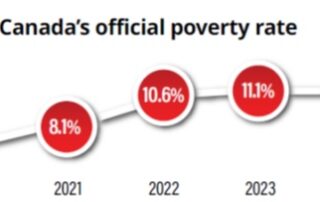
Canada’s Official Poverty Dashboard of Indicators: Trends, April 2026
This dashboard summarizes progress on poverty reduction for Canadians and their households, from 2020 to 2024. In 2024, the poverty rate for Canada remained relatively stable at 11.0%, compared with the previous year (11.1%). This means that approximately 4.5 million [...]
Niagara Votes – Municipal Election, Monday October 26, 2026
The next municipal election in Ontario is on Monday, October 26, 2026. The Niagara Votes 2026 website is provided by a partnership between Niagara's 12 local municipalities and the Niagara Region. The partnership aims to streamline communications activities to ensure [...]
2025 Progress Report on Canada’s 2022 to 2026 Federal Sustainable Development Strategy
This 2025 Progress Report reflects the environmental, social and economic dimensions of sustainable development, tracking the Government of Canada’s progress since the publication of the 2022 to 2026 Federal Sustainable Development Strategy (FSDS). It brings together key contributions of the [...]
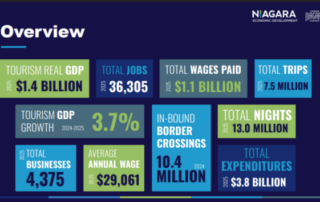
Niagara Tourism Profile 2026
This profile provides a comprehensive overview of the Niagara region’s tourism sector, including economic contributions, visitor activity, business composition, and workforce insights. The report highlights key indicators which offer a current snapshot of tourism’s role in Niagara’s economy: GDP Employment [...]
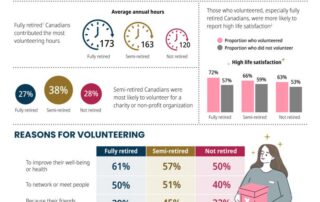
Volunteering & Charitable Giving in Canada, 2018 to 2023
In recent years, unprecedented challenges have contributed to pressures on Canada's volunteer and charitable giving sector. Impacts from the COVID-19 pandemic, including increased demand for services, inflation, and labour shortages have all had an effect. Data from the 2023 Statistics [...]
Children’s Experiences of Homelessness in Shelter Living
In 2022, the YWCA Niagara Region partnered with Drs Rebecca Raby and Christine Tardif-Williams of Brock University to embark on a research project into the lives and experiences of children who are homeless with their families. This is an underexplored [...]
Niagara District Airport 2025-2045 Master Plan
This Master Plan is a community-informed roadmap. It outlines the path forward in transforming the Niagara District Airport from a general aviation hub into a modern regional gateway that supports both Niagara region residents and the 13 million tourists who [...]
Planning for the Future: A Data-Driven Health System in Niagara
This report by the Niagara Ontario Health Team - Équipe Santé Ontario Niagara (NOHT-ÉSON) establishes a baseline understanding of the region’s population health, service utilization and available resources. The intent is to guide collective planning and investment over the next [...]
Designed to Fail: How Ontario’s Income Security Policies Create and Perpetuate Homelessness
As of July, 2025, more than 30,000 people receiving Ontario Works (OW) or Ontario Disability Support Program (ODSP) benefits were experiencing homelessness – a 72 per cent increase since July, 2019. Homelessness among those who have relied on OW for [...]
Canadian Caregiving Summit 2025 Act on Care Report
Making caregiving a national priority is the shared purpose of more than 500 caregivers, care providers, systems leaders, policymakers, and researchers from across Canada, who gathered for this November, 2025 summit held in Ottawa. Participants call for recognition of care [...]
Overdue: The Case for Canada’s Public Libraries
This report shows why investment in public libraries is essential to Canada’s post-pandemic recovery, competitiveness and resilience. It makes the case that Canada’s public libraries enable governments to meet their obligations and strengthen the common good. Canada’s libraries are an [...]
Community Potential Impact Report 2025 — Strengthening Systems, Supporting Niagara
The Community Potential Impact Report 2025 highlights a year of research, collaboration, and cross-sector leadership aimed at strengthening how Niagara works together. The report shares how Community Potential supports alignment across sectors by translating data into action, convening partners, and [...]