
Not-For-Profits
This website, hosted by ServiceOntario is a central source of information for not-for-profits and charities. Here you will find guidance on how to start and manage your not-for-profit or charitable organization. You can get information about the laws and regulations that [...]

Creating Shared Prosperity and Leading by Example
This document puts forward the roles municipal and regional government can play to contribute to poverty reduction including: • Leadership • Public Policy Decision Making • Programs/Services • Corporate Operations/Culture and Inter-Governmental Advocacy Published By: Niagara Poverty Reduction Network Contact: [...]

National At Home: Five Demonstration Site Reports
In Canada, our current response relies heavily upon shelters for emergency housing and emergency and crisis services for health care. Typically, individuals who are homeless must first participate in treatment and attain a period of sobriety before they are offered [...]

Main Messages from the Cross-Site at Home
In Canada, our current response relies heavily upon shelters for emergency housing and emergency and crisis services for health care. Typically, individuals who are homeless must first participate in treatment and attain a period of sobriety before they are offered [...]
Cross-Site at Home Executive Summary
In Canada, our current response relies heavily upon shelters for emergency housing and emergency and crisis services for health care. Typically, individuals who are homeless must first participate in treatment and attain a period of sobriety before they are offered [...]
National Final Report: Cross-Site At Home
In Canada, our current response relies heavily upon shelters for emergency housing and emergency and crisis services for health care. Typically, individuals who are homeless must first participate in treatment and attain a period of sobriety before they are offered [...]

15th Annual Family Finances Report
The 15th annual report of the Vanier Institute’s Current State of Canadian Family Finances is an up-to-date and accessible guide to available data on the economic circumstances of Canadian families, designed to help researchers, students, teachers and anyone with an [...]

Parent Direct Niagara
Parent Direct Niagara is an online directory to help you find information and links to programs, services, and resources for children and families in Niagara. You will find links to the following information on their website: • Interactive Learning Programs [...]

Realizing Our Potential: Ontario’s Poverty Reduction Strategy (2014-2019)
Ontario’s first Poverty Reduction Strategy, Breaking the Cycle, released in 2008, demonstrates that a concerted focus on poverty reduction makes a difference. Ontario has already made significant progress towards reducing poverty in the province. But we recognize that this is [...]

World Health Organization Report on Suicide Prevention
More than 800 000 people die by suicide every year – around one person every 40 seconds, according to WHO’s first global report on suicide prevention, published today. Some 75% of suicides occur in low- and middle-income countries. Pesticide poisoning, [...]

Social Determinants of Health: The Canadian Facts
The primary factors that shape the health of Canadians are not medical treatments or lifestyle choices but rather the living conditions they experience. These conditions have come to be known as the social determinants of health. The importance to health [...]

Being Poor in West Niagara
Community Care of West Niagara has been involved in the local poverty conversation for many years. CCWN is a registered charitable non-profit organization that has been serving West Niagara since 1967. Our founder, Doreen Hutchinson, identified a need to assist [...]

Walk This Way User Guide and Magnetic Calendar
The Walk This Way Kit supports healthy communities by promoting walking as the single most sustainable physical activity. The kit provides individuals with all of the components that they need to support them in creating healthy walking habits. The Walk [...]

Early Childhood Community Development Centre 2013/14 Annual Community Report
Reflecting on this past year, we feel a tremendous sense of gratitude for the opportunity of supporting Niagara’s early learning and child care community for more than 20 years now. When the ECCDC opened its doors in 1993, few of [...]

Greenbelt Fund Green Papers Volume 10: How food is purchased in the broader public sector
The way food is purchased in the Broader Public Sector (BPS) ranges from simple to complex. At its simplest, institutions such as schools and daycares “shop the specials” and buy food at grocery stores. At its most complex, institutions such [...]
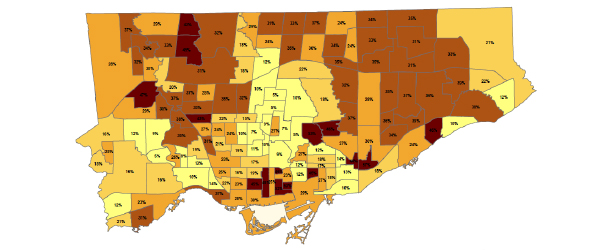
New data shows epidemic poverty levels in Toronto
This four-page fact sheet visualizes new data on poverty in Toronto. The document has been jointly prepared by the Alliance for a Poverty-Free Toronto, Children’s Aid Society of Toronto, Colour of Poverty – Colour of Change, Ontario Campaign 2000, and [...]

TEMPO: Police Interactions A report towards improving interactions between police and people living with mental health problems
In 2008 the MHCC conducted a review of the basic/recruit training, which occurs primarily at Canadian police colleges/academies, concerning interactions with people with mental illnesses. To complement that study, in 2010, the MHCC conducted a review that examined the nature [...]

Health Indicators 2013
Before Health Indicators moves to interactive, digital reporting in the spring of 2014, this final report in the 14-year series presents the initial objectives of the CIHI–Statistics Canada Health Indicators project and some accomplishments in reporting on the performance of [...]
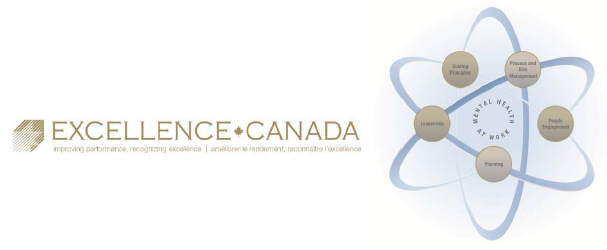
Mental Health at Work
Excellence Canada’s Mental Health at Work® program serves as a roadmap for organizations in any sector that wish to encourage, support, and implement exemplary mental health-related programs in the workplace. The Mental Health at Work® progressive program has been developed [...]
Police Encounters with People in Crisis
As publicly announced by Chief of Police Bill Blair of the Toronto Police Service on August 30, 2013, the Honourable Frank Iacobucci has been engaged to conduct an independent review of the use of lethal force by the Toronto Police [...]